Example: air traffic controller
An NHS self help guide
5 This booklet aims to help you to begin to: Understand self-harm, what can cause it and keep it going. Explore ways of controlling self-harm. Discover other ways of getting help. More than half of people who die by suicide have a history of self-harm. The following are some things to look for that may mean you
Tags:
Information
Domain:
Source:
Link to this page:
Documents from same domain
An NHS self help guide
web.ntw.nhs.ukThis booklet is for anyone who has experienced a bereavement either recent or in the past. It may also be useful to people facing the certain loss of a loved one. Although it is sometimes hard to face these issues in advance, this can be helpful. Relatives or friends of a bereaved person may also find this booklet useful.

Controlling Anger
web.ntw.nhs.ukfront doesn’t move. Jim starts to feel tension rising and a tight feeling in his stomach. He begins to curse the driver in his mind “Stupid, lazy, selfishly holding everyone up, he’ll make me late”. The feeling builds up, he begins to feel hot. Someone brushes against him by accident; he turns on them, swears and pushes them away roughly.

An NHS self help guide
web.ntw.nhs.ukRelaxation downloads 32 Useful books 33 References 36 Rate this guide 36 . 3 “Bad with your nerves” “A worrier” “Stressed out” ... The fight or flight response is a really basic system that probably goes back to the days of cave men, and is also present in animals who depend on it …

Depression and Low Mood - web.ntw.nhs.uk
web.ntw.nhs.uknever felt a bit low and unmotivated to face the day. However, when depression develops, this becomes more severe. There ... The doctor may suggest self help (like this), a talking therapy, antidepressant tablets or a mixture of all three. ... difficulties and begin to work out ways of overcoming depression. This can usually be offered by phone ...
Post Traumatic Stress
web.ntw.nhs.ukPost-traumatic stress reactions can affect you in at least four different ways: How you feel. The way you think. The way your body works. The way you behave. 7 It may help you understand how you are feeling by placing a tick next to those symptoms you experience regularly:

Depression and low mood: A guide for partners
web.ntw.nhs.ukDepression and low mood: A guide for partners If your partner is struggling with symptoms of depression or low mood, this guide is for you.
Sleeping Problems - web.ntw.nhs.uk
web.ntw.nhs.uksleeping often remains, and generally, post-menopausal ... Other health problems can also affect sleep, for example diabetes, high blood pressure and breathing difficulties. ... once they are asleep the quality of sleep is good. Staying asleep The …

Food for Thought - Cumbria, Northumberland, Tyne and …
web.ntw.nhs.uk4 “I hate being overweight, but I can’t seem to do anything about it. I’ve tried every diet in the book, and slimming clubs, but I always seem to put the weight back on and

Social Anxiety - Cumbria, Northumberland, Tyne and Wear ...
web.ntw.nhs.uk4 “I dread going to places where I may have to talk to people. Before I set off I just think I’m going to do or say something stupid, and that people will think I’m an idiot.

Postnatal Depression - web.ntw.nhs.uk
web.ntw.nhs.ukWomen who experience postnatal depression describe a number of symptoms, most of which are written below. These symptoms can feel quite overwhelming at a time when a new baby needs so much care and attention. These are some of the signs or symptoms that you may have if you are suffering from postnatal depression.
Related documents
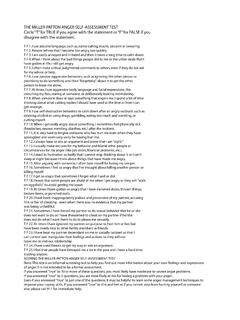
THE MILLER-PATTON ANGER SELF-ASSESSMENT TEST Circle …
www.betterdaysandnights.comSCORING THE MILLER-PATTON ANGER SELF-ASSESSMENT TEST Note: This test is an informal screening test to help you find out more information about your own feelings and expressions of anger. It is not intended to be a formal assessment. If you answered “true” to 10 or more of these questions, you most likely have moderate-to-severe anger problems.

What is Anger?
www.cci.health.wa.gov.autime to time. Anger can be expressed by shouting, yelling, or swearing, but in extreme cases it can escalate things) or people (self or others). In some cases, anger might look much more subtle, more of a brooding, silent anger, or withdrawal. In a controlled manner, some anger can be helpful, motivating us to make positive changes or take

Self Help for Anger - McGill University
www.mcgill.caSelf Help for Anger Do you get frustrated and annoyed by the slightest thing? Do you find yourself saying hurtful things when someone has annoyed you? Have you damaged or thrown things because you were so furious? Have you been physically aggressive towards someone? If the answer to any of these questions is ‘yes’, you may be experiencing problems relating to
Updated 2019 ANGER - Substance Abuse and Mental Health ...
store.samhsa.govthe better equipped he or she will be to manage anger in response to anger-provoking events. In studies at the SFVA Medical Center and the Zuckerberg San Francisco General Hospital using this treatment model, significant reductions in self-reported anger and violence have consistently

Updated 2019 ANGER - Substance Abuse and Mental Health ...
store.samhsa.govin the anger management treatment are best learned by practice and review and by completing the between-session challenges in this workbook. Using this workbook as you participate in the 12-week anger management group treatment will help you develop the skills that are necessary to successfully manage anger. Introduction

Anger Managment Group - School Social Work
schoolsocialwork.netAM treatment focuses on physiological, cognitive and behavioral components of the anger experience and is designed to help participants develop self-control skills in each of these areas (Feindler & Engel, 2011). In order to manage the physiological component, AM training should first direct the participants

Anger and PTSD - Veterans Affairs
www.ptsd.va.govPTSD, comorbid dysregulated anger significantly increases risk for engaging in both interpersonal and self-directed aggression. Furthermore, increased anger appears to play a mediating role between PTSD and these negative outcomes (e.g., Bhardwaj, 2019; Dillon et al., 2020b). These studies highlight the importance of
Anger - Mind
www.mind.org.ukAnger Explains anger, giving practical suggestions for what you can do and where you can go for support. Also includes advice for friends and family. If you require this information in Word document format for compatibility with screen readers, …