Example: marketing
Guidance on Barrier Design - Building Performance
Note: A ‘balustrade’ is the commonly used term for a barrier. Barrier Any building element intended to prevent a person from falling and to retain, stop or guide a person. Boundary joist or joists A joist running along the outer ends of the floor joists. Decking The material forming the walking surface of a floor or deck supported by joists.
Tags:
Information
Domain:
Source:
Link to this page:
Documents from same domain
Building work that does not require a building consent
www.building.govt.nzGUIDANCE Building Act 2004 THIRD EDITION 2014 - AMENDED AUGUST 2017 Building work that does not require a building consent

Module 6: Earthquake resistant retaining wall design
www.building.govt.nzguidance on earthquake design aspects for retaining . structures that are not well covered in these handbooks or elsewhere. The main objective is to identify situations where seismic design of retaining structures should be considered, to provide the necessary seismic parameters, and to identify key issues relating to seismic design.
C/AS2 - Acceptable Solution for Acceptable Solution for ...
www.building.govt.nzC/AS2 Acceptable Solution for Buildings with Sleeping (non institutional) (Risk Group SM) For New Zealand Building Code Clauses C1-C6 Protection from Fire
Earthquake geotechnical engineering practice
www.building.govt.nzEarthquake geotechnical engineering is a highly specialised field. As such the investigations for this need to be developed and carried out by an appropriately qualified and experienced geotechnical engineer or engineering geologist (referred to herein as the geotechnical professional). For the purposes of this document ‘geotechnical

E2 External Moisture
www.building.govt.nzFor single- and two-storey concrete and concrete masonry construction within specific limitations: E2/AS3. For light steel framed buildings up to 3 storeys, within specific limitations: E2/AS4. E2.3.3 Ground contact or proximity All walls, floors and structural elements in ground contact or proximity, except for buildings where external
Worked Example 4 | Design of a tied-back retaining wall to ...
www.building.govt.nzDesign of a tied-back retaining wall to resist earthquake loading . Worked example to accompany MBIE Guidance on the seismic design of retaining structures for residential sites in Greater Christchurch (Version 2) November 2014 . Tied-back retaining walls were used originally as a substitute for braced retaining walls in deep excavations.
Acceptable Solutions and Verification Methods
www.building.govt.nz4.2 Sizing of downpipes 42 4.3 Installation of downpipes 42 5.0 Roof Gutters 42 5.1 Size of roof gutter 42 5.2 Materials44 5.3 Gradients44 5.4 Thermal movement 44 5.5 Overflow outlets 44 Appendix A Rainfall intensities 45 Index 47 Contents Amend 4 Dec 2000 Amend 4 …
Acceptable Solutions and Verification Methods
www.building.govt.nz4.2 Sizing of downpipes 42 4.3 Installation of downpipes 42 5.0 Roof Gutters 42 5.1 Size of roof gutter 42 5.2 Materials44 5.3 Gradients44 5.4 Thermal movement 44 5.5 Overflow outlets 44 E1/AS1 Appendix A Rainfall intensities 45 Acceptable Solution E1/AS2 52 1.0 AS/NZS 3500.3 Stormwater Dec 2000 drainage52 Index 56 Contents Amend 4
Commentary for Acceptable Solutions C/AS1 to C/AS7 ...
www.building.govt.nzDecember 2013. Contents Acceptable Solutions C/AS1 to C/AS7 Part 1: General 2 ... 4.11 Protected shafts 31 4.13 Floors 32 4.14 Subfloor spaces 32 ... INNOVATION AND EMPLOYMENT – 15 FEBRUARY 2013 I 1 Part 5: Control of external fire spread 34 5.1 General principles 34 5.2 Horizontal fire spread from external walls 36 5.5 Table method for ...
Constructing Cavities - Building Performance
www.building.govt.nzTable 23 (’Properties of roof underlays and building wraps‘). Install the wall underlay directly over the framing. Install the cavity battens directly over the wall underlay as described in Cavity battens on page 9. No additional wall underlay is needed between the wall cladding and the cavity battens except in the following situations.
Related documents

Tecumseh Trail Guide - Hoosier Hikers Council
hoosierhikerscouncil.orgroutes can add miles of road-walking, which can drastically alter the nature of the hike you ... Note that the information in the guide below will not reflect temporary closures. See the . ... the nice broom provided to clean the shelter before leaving. If you see any litter, please consider packing it out, to keep it clean for the next hiker ...

All about me - Alzheimer
alzheimer.cacaregivers can review it from time to time to note changes and plan for the future. There are ... (Please describe any other details of your life that would help create a full picture of you ... Walking • Habits, usual routes, ability to be independent Preparing for bed. 14 Meal time An enjoyable breakfast: Lunch: Dinner:

Directorate of Training and Education Outreach Training ...
www.osha.govPlease note that ‘working safely’ in the industry does not meet the industry safety experience ... Walking and Working Surfaces, including fall protection – 1 hour. d) Exit Routes, Emergency Action Plans, Fire Prevention Plans, and Fire Protection – 2 hours. e) Electrical – 2 hours.
Welcome to London - Visitor guide
media.limkokwing.netWalking Walking in London is a great way to get around. For more information on walking routes visit tfl.gov.uk/walking River Services Travelling on the river can be a relaxing way to travel whilst taking in the sights, and Oyster cards can now be used on Thames Clippers services. Go to tfl.gov.uk/river or pick up the River Services leaflet from

Dial-A-Lift Application - Intercity Transit
www.intercitytransit.comDo you feel this individual can board a bus using the lift, handrails and/or by having the bus lowered to ground level? Is walking detrimental to this individual’s condition? If so, please explain If walking is not detrimental, how far can this individual travel doing a combination of walking/standing? 2 blocks 3 blocks 6 blocks 9 blocks

6-week power endurance training program
www.trainingbeta.com19 week 2 • Day 2 optional focuS: climbing, campus & system boards time: 2.5-4.5 hours round 1: power endurance climbing 3 routes (hard, hard, easy) TIME: 1.5-2.5 hours choose 2 routes that are hard for you (can be the same route) and 1 that’s easy for you, and do them all in a row without rest. on lead, top rope, or
FIRE ESCAPE SIGNS – Guidance on compliance
www.bristol.ac.uk“rapidly walking man”. Signs to British Standard 5499: part 4:2000 have the man passing through a door. Another way to identify signs to BS5499 is that the text is in lower case apart from the first letter. Signs that are illuminated from behind or within (as in the case of an escape light with escape sign incorporated) will have a white
New Forest Cycle Routes Map - New Forest National Park ...
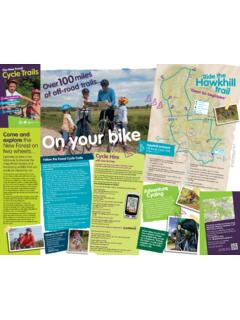
www.newforestnpa.gov.uky and safe to do so. Never ride more than two abreast. • y Commission tracks, bridleways, byways, restricted byways and designated routes. • y Commission y to be off Forest tracks by sunset. • Be polite to other cyclists, motorists, pedestrians and residents. • When passing people and animals, use your bell or call out a