Transcription of Internal Revenue Service memorandum
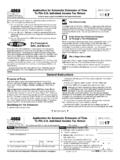
1 Office of Chief Counsel Internal Revenue Service memorandum CC:SB:CPillitteri POSTF-142463-05 Via Hand Delivery date: November 25, 2005 to: Doug Rogers Chief, Penalties &Interest (SE:S:E:EP:PI) from: Ronald D. Pinsky Assistant Division Counsel (Tax Litigation) (CC:SB) sUbject: Validity of Extensions of Time to File and Imposition of Interest on Penalties This is in response to your request for our advice 'regarding the validity of extensions of time to file returns and the imposition of interest on penalties in the first four situations described below. We also address a fifth situation for clarification purposes. ISSUES AND FACTS 1. Whether an extension of time to file a return is valid in Situations 1 through 4 below, and when does interest begin accruing on the accuracy-related penalty in Situations 3 and 4 below: Situation 1 On April 15, 2003, Taxpayer A filed both a , Individual Income Tax Return (Form 1040) and an Application for Automatic Extension of Time to File Individual Income Tax Return (Form 4868) for tax year 2002.
2 Situation 2 On April 15, 2003, Taxpayer B filed a Form 1040 for tax year 2002. On August 1,2003, Taxpayer B filed an Application for Additional Extension of Time to File Individual Income Tax Return (Form 2688) for tax year 2002. Situation 3 Same as Situation 1, except an audit of Taxpayer A's return resulted in additional-tax due and an accuracy-related penalty under 6662. Situation 4 Same as Situation 2, except an audit of Taxpayer B's' return resulted in additional tax due and an accuracy-related-penalty under 6662. PMTA:00765 POSTF-128901-05 2 2. When does interest begin accruing on the accuracy-related penalty in Situation 5 below? . Situation 5 On April 1, 2003, Taxpayer C filed a valid Form 4868 for tax year 2002. On May 2, 2003, Taxpayer C filed a Form 1040 for tax year 2002. An audit of Taxpayer C's return resulted in additional tax due an accuracy-related penalty under -6662. LAW AND ANALYSIS 6601 (e)(2)(B) provides for the imposition of interest on additions to tax under 6651 (a)(1) and 6662 (as well as any other addition to tax imposed under part /I of subchapter A of chapter 68 of the Internal Revenue Code, such as the civil fraud penalty under 6663).
3 Interest is imposed for the period beginning on the date on which the relevant return is required to be filed, including any extensions, and ending on the date of payment of the additions to tax. Under 6081(a), the Service may grant a reasonable extension of time for filing a return. Treas. Reg. provides that an individual who is required to file an individual income tax return will be allowed an automatic four-month extension of time to file provided the requirements contained therein are Those requirements are: 1. An application must be submitted on Form 4868 or in any other manner as may be prescribed by the Service . Treas. Reg. (a)(2). 2. The application must be filed on or before the date prescribed for filing the individual income tax return. Treas. Reg. (a)(3). 3. The application must be filed with the Service office designated in the application's instructions. Treas. Reg. (a)(3). 4. The application must show the full amount properly estimated as tax for the taxable year.
4 Treas. Reg. (a)(4). An application for extension that meets these four requirements is valid, even if the return is filed on or before the original due date of the return. That is, the application for extension is not invalidated under the regulations merely because the extension ultimately proved to be unnecessary. 1 Treas. Reg. was removed effective November 7,2005. Under Treas. Reg. , effective for applications for an automatic extension of time to file an individual income tax return filed after December 31, 2005, individuals may now request an automatic six-month extension. see 9229,70 Fed. Reg. 67356 (November 7, 2005). Since the hypothetical situations posed in this advice deal with tax 2002 for which extension requests were filed (or would have needed .to have-been filed) in 2003. the temporary regulation <Ioes not apply to -these situations. POSTF-128901-05 3 An application that does not meet the four requirements is not valid. -For example, case law holds tt)at applications for extension are invalid and the extensions received thereon are void where the taxpayer fails to properly estimate the tax for the taxable year.
5 See Crocker v. Commissioner, 92 899 (1989); Oliver v. Commissioner, Memo. 1997-84. However, the mere fact that the taxpayer underestimated the tax, standing alone, does not cause the application to be invalid and the extension received thereon to be void. See,~, Graham v. Commissioner, Memo. 2005-68. The test is whether the taxpayer made a bona fide and reasonable estimate of the tax based on information available to the taxpayer at the time the taxpayer made the estimate. Id. Treas. Reg. (c) provides that the Service may terminate an automatic extension at any time by mailing to the taxpayer a notice of termination. The notice must be mailed at least ten days prior to the termination date designated in the notice. If a taxpayer needs additional time to file a return beyond the automatic four-month extension, the taxpayer, before the expiration of the automatic four-month extension, may request an additional extension of up to two months under Treas. Reg. Discussion of the five situations presented follows: Situations 1 and 3 In Situations 1 and 3, the validity of the application for extension depends upon whether the application meets the four requirements set forth above.
6 The fact that the Form 4868 was filed on the same day that the Form 1040 was filed is irrelevant, since Treas. Reg. (a)(3) requires only that it be filed on or before the date prescribed for filing the Form 1040. If, for example, the application for extension does not show a proper estimate of the tax liability for the taxable year, it is invalid. For Situation 1, this requires a determination by the Service based on a comparison of the estimate shown on the application for extension with the tax due shown on the return. For Situation 3, this requires a determination by the Service based on a comparison of the estimate shown on the application for extension with the tax determined to be due as a result of the subsequent audit. If the Service determines that the application for extension is invalid for failure to comply with any of the four requirements set forth in the regulations, interest is imposed on the accuracy-related penalty beginning on April 15, 2003, the due date of Taxpayer A's return for tax year 2002.
7 Of course, since Taxpayer A filed the return by the original due date, there will be no addition to tax under 6651(a)(1). 2 Taxpayers who request an automatic six-month extension under Treas. Reg. (see footnote 1) may not r~quest an additional-two-month extension under freas. Reg. POSTF-128901-05 4 On the other hand, if the Service determines that the application for extension is valid (that is, that it complies with all four requirements set forth in the regulations), interest is imposed on the accuracy-related penalty beginning on August 15, 2003, the extended due date of Taxpayer A's return for t~x year 2002. The Service also may terminate an automatic extension in accordance with Treas. Reg. (c). If the Service so terminates the automatic extension, interest is imposed on additions to tax under 6651(a)(1) and 6662 beginning on the termination date. Situations 2 and 4 In Situations 2 and 4, the extension requested by Taxpayer 8 on Form 2688 will not be granted.
8 The facts do not indicate that Taxpayer 8 requested an automatic four-month extension of time to file. Treas. Reg. (a)(5) provides that, except in undue hardship cases, no extension of time for filing an individual income tax return will be granted under Treas. Reg. until an automatic four-month extension has been allowed. Form 2688 specifies that, if a Form 4868 requesting an automatic four-month extension has not been filed, the Service will grant an extension only for undue hardship, which must be fully explained on the Form 2688. Since Taxpayer 8 filed the Form 1040 by the original due date, there is no undue hardship, and the extension . requested on Form 2688 will not be granted. Since there is no extension of time to file, interest is imposed on the accuracy-related penalty beginning on April 15, 2003, the due date of Taxpayer 8's return for tax year 2002. Of course, since Taxpayer 8 filed the return by the original due date, there will be no addition to tax under 6651(a)(1).
9 Situation 5 In Situation 5, Taxpayer C filed a valid Form 4868 before the original due date of the return. Taxpayer C filed the Form 1040 well before the extended due date of August 15, 2003. An audit of Taxpayer C's return resulted in additional tax due and an accuracy-related penalty under 6662. Under 6601 (e)(2)(8), interest is imposed on the accuracy-related penalty beginning on August 15, 2003, the extended due date of Taxpayer C's return for tax year 2002. This is the case even though the return was filed May 2,2003. We appreciate this opportunity to assist you. If you have any further questions, please contact Charles Pillitteri at 202-283-7671.