Transcription of KEY CONCEPT The circulatory system transports materials.
1 Sunshine : The studentunderstands that livingthings are composedof major systems that function in reproduction, growth,maintenance, and : The studentknows that a change inone or more variablesmay alter the outcomeof an 18:Transport and Protection631 VOCABULARY circulatory system p. 631blood p. 631red blood cell p. 633artery p. 635vein p. 635capillary p. 635 BEFORE, you learned The urinary system removeswaste The kidneys play a role inhomeostasisNOW, you will learn How different structures of the circulatory system worktogether About the structure and function of blood What blood pressure is andwhy it is importantKEY CONCEPTThe circulatory systemtransports circulatory system works with otherbody have read that the systems in your body provide materials and energy. The digestive system breaks down food and nutrients, and therespiratory system provides the oxygen that cells need to release energy.
2 Another system , called thetransportsmaterials from the digestive and the respiratory systems to the and wastes are carried in a fluid called. Blood moves continuously through the body, delivering oxygen and othermaterials to cells and removing carbon dioxide and other wastes from system ,VOCABULARYAdd a frame game diagram for the term circulatory system to your notebook. EXPLORE The circulatory SystemHow fast does your heart beat?PROCEDUREHold out your left hand with your palm facing the first two fingers of your right handon your left wrist below your thumb. Moveyour fingertips slightly until you can feel your pulse. Use the stopwatch to determine how manytimes your heart beats in one DO YOU THINK? How many times did your heart beat? What do you think you would find if you tookyour pulse after exercising?321 MATERIALS stopwatch632 Unit 5:Human BiologyStructures in the circulatory system order to provide the essential nutrients and other materials thatyour cells need, your blood must keep moving through your circulatory system , which is made up of the heart and blood vessels, allows blood to flow to all parts of the body.
3 The circulatorysystem works with other systems to provide the body with this continuous flow of life-giving HeartThe heart is the organ that pushes blood throughout the circulatorysystem. The human heart actually functions as two pumps onepump on the right side and one on the left side. The right side of theheart pumps blood to the lungs to receive oxygen, and the left sidepumps blood to the entire body. The lungs receive oxygen when youinhale and remove carbon dioxide when you exhale. Inside the lungs,the respiratory system interacts with the circulatory heart is a pump moving bloodthroughout the entire HeartRESOURCE out more about thecirculatory to lungsblood from lungsblood to lungsblood from lungsWhich part of the heart pumps oxygen-poor blood to the lungs?Which part of the heart pumps oxygen-rich blood to the body?The right atriumreceives oxygen-poor blood from allparts of the right ventriclepumps oxygen-poorblood to the left ventriclepumps oxygen-rich bloodto all parts of the left atriumreceives oxygen-richblood from the bloodoxygen-poor bloodChapter 18:Transport and Protection633 Each side of the heart is divided into two areas called blood, which is blood from the body with less oxygen,flows to the right side of your heart, into a filling chamber called theright atrium.
4 With each heartbeat, blood flows from the right atriuminto a pumping chamber, the right ventricle, and then into the the blood releases carbon dioxide waste and absorbs picking up oxygen, blood is pushed back to the heart, fillinganother chamber, which is called the left atrium. Blood moves fromthe left atrium to the left ventricle, a pumping chamber, and againbegins its trip out to the rest of the body. Both oxygen-poor blood andoxygen-rich blood are red. However, oxygen-rich blood is a muchbrighter and lighter shade of red than is oxygen-poor blood. The diagram on page 632 shows oxygen-poor blood in blue, so that youcan tell where in the circulatory system oxygen-poor and oxygen-richblood are Your ReadingSummarize the way blood moves through the heart. Remember, a summary contains only the most important oxygen that your cells need in order to release energy must bepresent in blood to travel through your body.
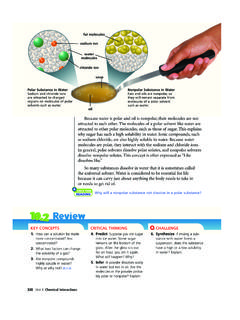
5 Blood is a tissuemade up of plasma, red blood cells, white blood cells, andplatelets. About 60 percent of blood is plasma, a fluid that con-tains proteins, glucose, hormones, gases, and other substancesdissolved in blood cells help your body fight infection by attack-ing disease-causing morenumerous than white blood cells and have a different pick up oxygen in the lungs and transport it throughout thebody. As red blood cells travel through the circulatory system , theydeliver oxygen to other are large cell fragments that help form blood clots when a blood vessel is injured. You know what a blood clot is if you veobserved a cut or a scrape. The scab that forms around a cut or scrapeis made of clotted blood. After an injury such as a cut, platelets nearbybegin to enlarge and become sticky. They stick to the injured area ofthe blood vessels and release chemicals that result in blood clotting keeps blood vessels from losing too much Your ReadingWhat are the four components that make up blood?
6 Red blood cellsred blood cellwhite blood cellsplateletsBlood is made mostly ofplasma, which transportsred blood cells, whiteblood cells, and 634 Unit 5:Human BiologyThe circulatory system allows blood to flow continuouslythroughout the body. The runner depends on a constantflow of oxygen-rich blood to fuel his heartpumps oxygen-poor blood tothe lungs and oxygen-rich blood to all partsof the major veincarriesoxygen-poor blood fromall parts of the body tothe blood oxygen-poor bloodIn the vessels of thelungs,oxygen-poorblood becomes oxygen-rich major arteryandits branches deliver oxygen-rich blood to allparts of the SystemChapter 18:Transport and Protection635As blood travels through blood vessels, somefluid is lost. This fluid, called lymph, is collected inlymph vessels and returned to veins and arteries. Asyou will read in the next section, lymph and lymphvessels are associated with your immune scientists refer to the lymph and lymphvessels as the lymphatic system .
7 The lymphatic sys-tem helps you fight VesselsBlood moves through a network of structures calledblood vessels. Blood vessels are tube-shaped struc-tures that are similar to flexible drinking straws. Thestructure of blood vessels suits them for particularfunctions., which are the vessels that takeblood away from the heart, have strong walls. Anartery wall is thick and elastic and can handle thetremendous force produced when the heart blood vessels that carry blood back to the heart. The wallsof veins are thinner than those of arteries. However, veins are generally of greater diameter than are arteries carry oxygen-rich blood away from the heart, andmost veins carry oxygen-poor blood back to the heart. However, thepulmonary blood vessels are exceptions. Oxygen-poor blood travelsthrough the two pulmonary arteries, one of which goes to each two pulmonary veins carry oxygen-rich blood from the lungs tothe and arteries branch off into very narrow blood vessels arteries with veins.
8 Through capillariesmaterials are exchanged between blood and tissues. Oxygen and mate-rials from nutrients move from the blood in the arteries to the body stissues through tiny openings in the capillary walls. Waste materialsand carbon dioxide move from the tissues cells through the capillarywalls and into the blood in the Your ReadingCompare and contrast arteries, veins, and exerts pressure on blood you have read, the contractions of the heart push blood throughblood vessels. The force produced when the heart contracts travelsthrough the blood, putting pressure on the blood vessels. This force iscalled blood pressure. Compare a vessel to a plastic bag filled with IDEA AND DETAILSTake notes on the mainidea. Blood exerts pres-sure on blood , capillaries, andveins form a complex webto carry blood to all thecells in the body (30 ). 636 Unit 5:Human BiologyIf you push down at the center of the bag, you can see the water pushout against the sides of the heart pushes blood in a similar way, exerting pressure on thearteries, veins, and capillaries in the circulatory system .
9 It is importantto maintain healthy blood pressure so that materials in blood get to allparts of your body. If blood pressure is too low, some of the cells willnot get oxygen and other materials. On the other hand, if blood pres-sure is too high, the force may weaken the blood vessels and requirethe heart to work harder to push blood through the blood blood pressure is a serious medical condition, but it can be circulatory system can be considered as two smaller systems:one, the pulmonary system , moves blood to the lungs; the other, thesystemic system , moves blood to the rest of the body. Blood pressure ismeasured in the systemic part of the circulatory can think of blood pressure as the pressure that blood exertson the walls of your arteries at all times. Health professionals measureblood pressure indirectly with a device called a sphygmomanometer(SFIHG-moh-muh-NAHM-ih-t uhr).
10 Blood pressure is expressed with two numbers one number overanother number. The first number refers to the pressure in the arterieswhen the heart contracts. The second number refers to the pressure inthe arteries when the heart relaxes and receives blood from the PressureBlood pressure allows materials to travel to all parts ofyour ofblood onarteryblood flowarteryblood flowThere are four different blood red blood cell has special proteins on its surface. Onegroup of surface proteins determines blood type. There are two blood-type proteins, A and B. A person whose blood cellshave the A proteins has type A blood. One with cells having B proteins has type B blood. Some people have both proteins type AB blood. Other people have neither protein, a type of blood referred to as type you, or someone you know, has had a blood transfusion, a procedure in which one person receives blooddonated by another.